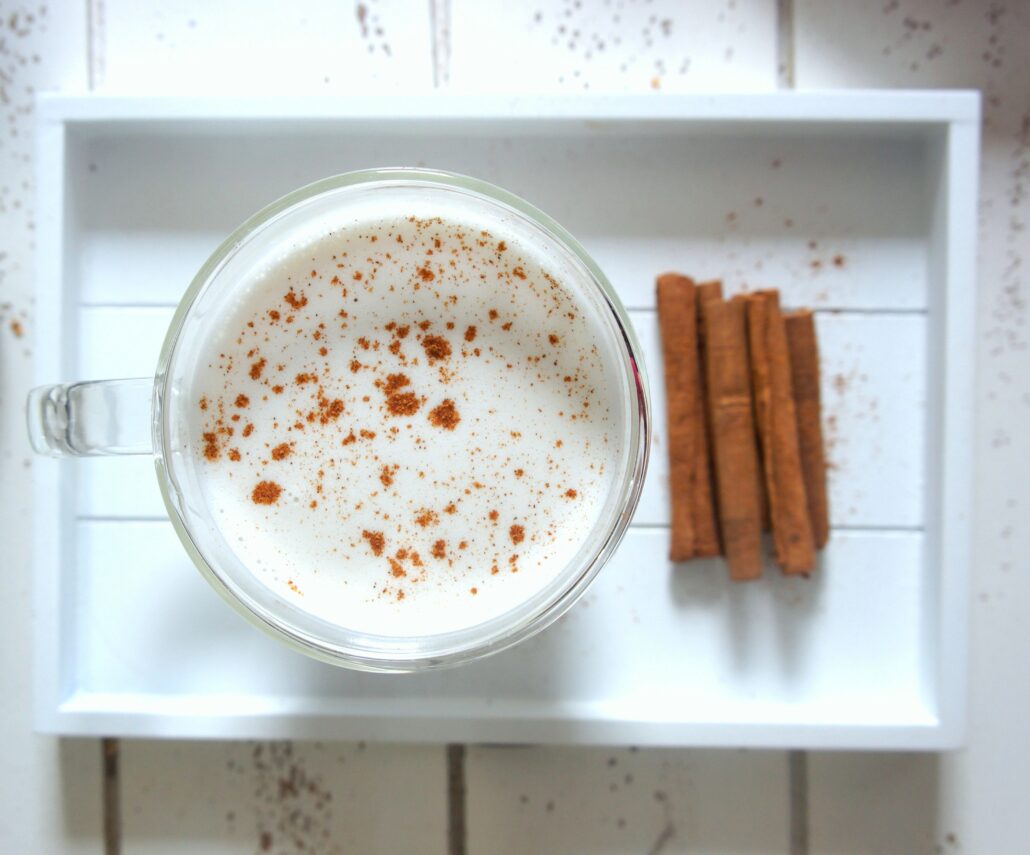
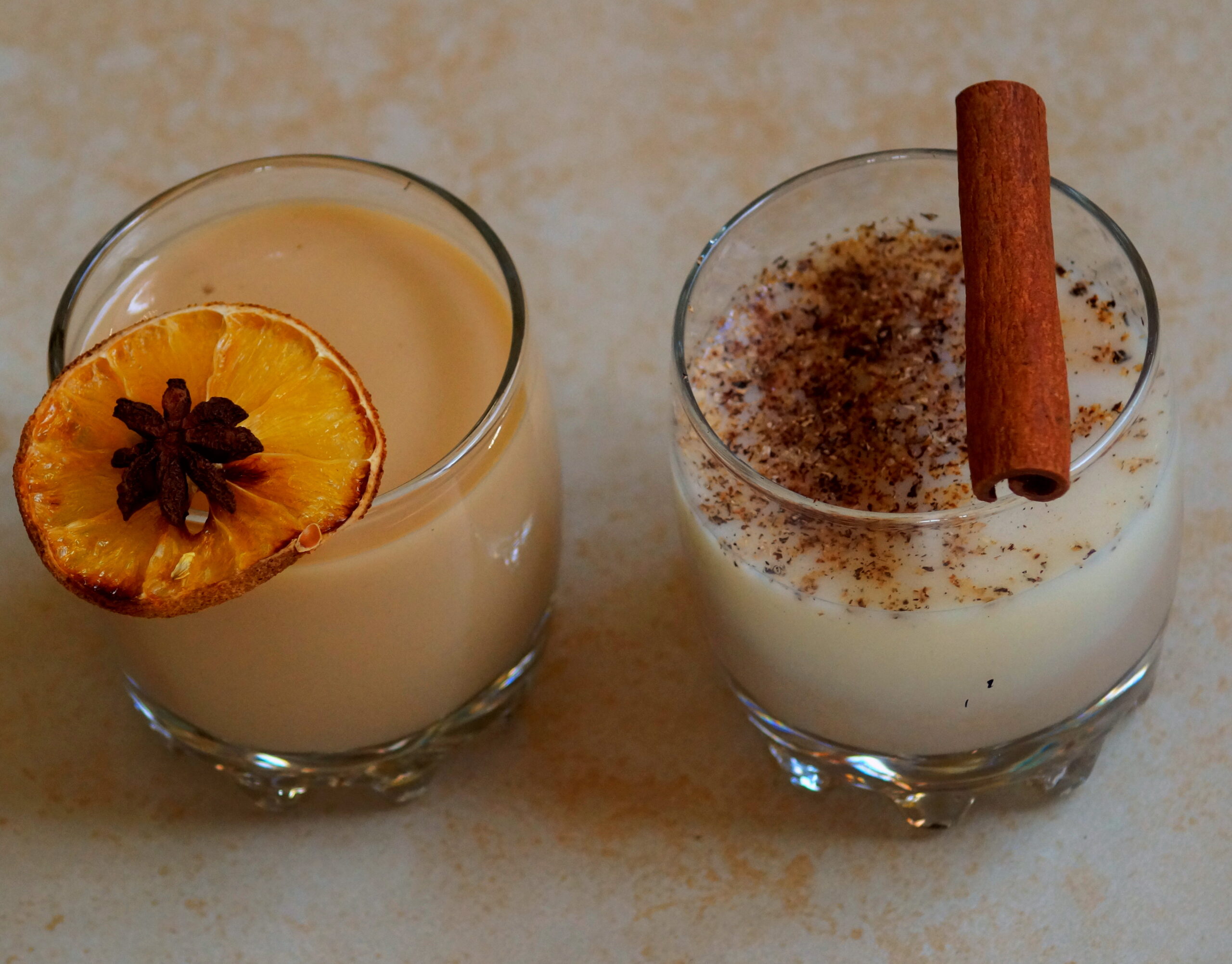
Ponche Creme is the quintessential Christmas beverage in the southern Caribbean, but across its range there are many different methods of making this drink. In the countdown to Christmas Day, Twelve Days of Ponche Creme will explore twelve different methods of making Ponche Creme across the region.
Day One: Traditional Ponche Crema
Accounts from across Latin America show that a style of custard made with eggs and dairy, fortified with spirits, and flavoured with spices was brought to the New World by Catholic monks and missionaries.
Originally used to provide nourishment to feeble patients, it eventually evolved into a rich beverage that was enjoyed on important Feast Days and the end of the year. Known by different names across Central and South America, this drink became known as Ponche Crema in Venezuela.
Traditional Ponche Creme is made by slowly stirring dairy, sweetener, and eggs, while it simmers over low heat on a stove. Rum and spices are then added to contribute to both flavour and preservation.
Day Two: Commercial Ponche Crema
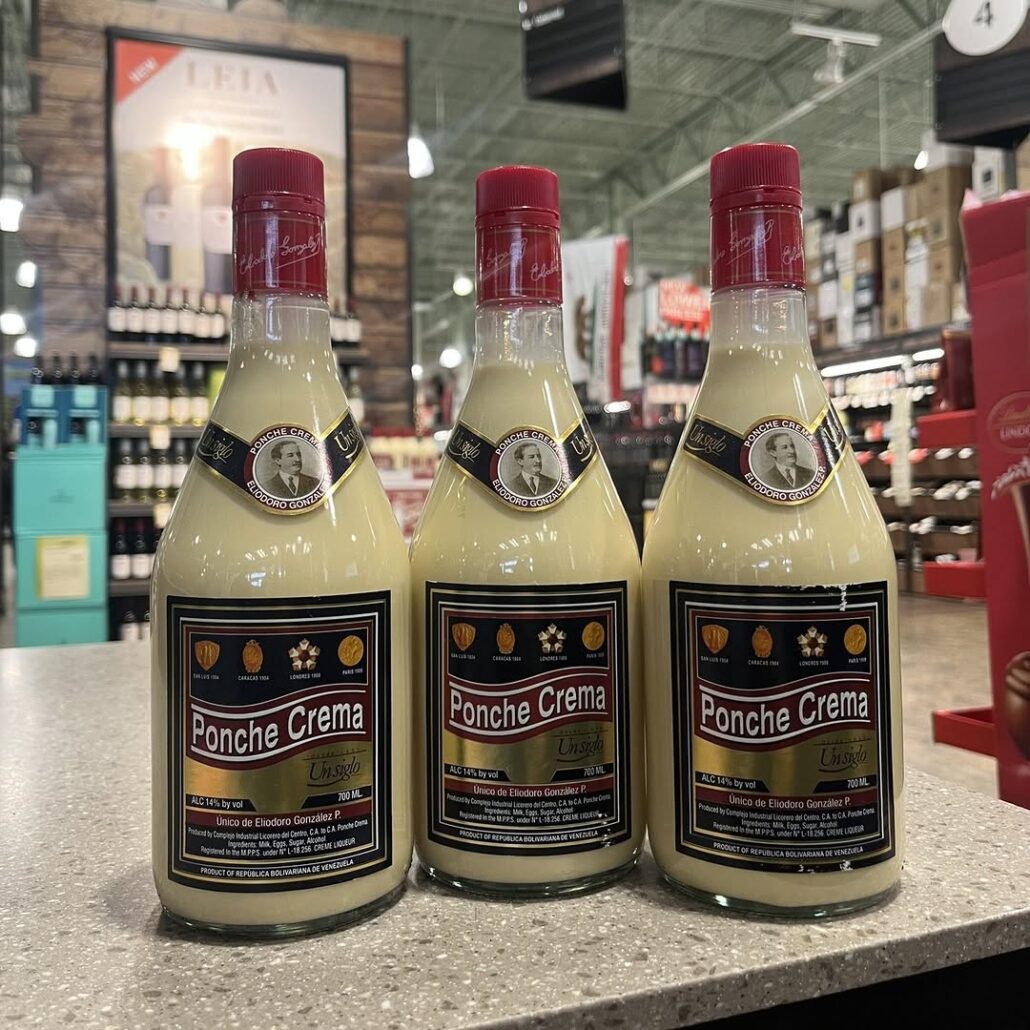
Although it originated as a homemade libation, commercial versions of Ponche Crema soon emerged. One version developed by a chemist and businessman called Eliodoro Gonzalez and labeled as simply “Ponche Crema” has been produced since 1900, making it the oldest continuously produced cream liquor in the world.
Another Venezuelan businessman travelled to nearby Curaçao in 1928 and established a commercial brand called Ponche Caribe based on his family recipe. From Curaçao also came the brand Ponche Kuba, although it is now produced at the Mount Gay Distillery in Barbados.
Beyond these major commercial brands of Ponche Crema with large-scale international distribution, there are many seasonal small batch producers making just a few bottles to sell for the Christmas season within their community. Christmas in the southern Caribbean is the perfect time to sample some different brands of commercial Ponche Crema and see the slight variations across different brands and batches.
Day Three: Flan Ponche Crema
An easy, convenient, and affordable way of making Ponche Crema is to use a flan as an ingredient. The flan could be used as a replacement for condensed milk and eggs, or it can be used in addition to those ingredients.
A flan made from scratch can be used, as well as one made from any boxed flan mix.
Day Four: Aged Ponche Crema
Food author and chef James Kenji López-Alt has noted that for about a decade now, aged eggnog has become fashionable. He has his own recipe, but the most popular by far is the recipe for aged eggnog by Alton Brown. Brown’s recipe uses large amounts of sugar, and high proof booze, and can stay well preserved in a fridge for over a year.
Very few people seek to actually age Ponche Crema, however, some people make Ponche Crema during Christmas in July and leave one bottle to enjoy in late November to kick off the Christmas season. Some people also make Ponche Crema in November, but finish off the last bottle on the last days of Christmas in January. In both of those cases, the flavours in the Ponche Crema spend a few weeks marrying and mellowing, and the Aged Ponche Crema is very different from the freshly made beverage.
To make Aged Ponche Crema, use a cask strength, aged Trinidad rum like Holmes Cay or the Dutchess 10 Cane, Rhumb Runner Fernandes, or Scarlet Ibis, and make it slightly sweeter than normal by adding some extra condensed milk.
Day Five: Proto-Ponche Crema
Ponche Crema, as well as the other Latin American Eggnogs like Rompope and Sabayon all evolved from a custard known by different names in the Mediterranean region but most commonly as Zabaglione. In Italy, Zabaglione or Zabaione is a dessert typically made with eggs, sugar, and Marsala wine. In France a similar dessert is referred to as Sabaillon, while in Spain it is known as Sabajón. In Tunisia, Sabayon is made without wine but with the addition of almond and orange blossom water.
When Zabaglione was brought to the New World by Spanish monks, it slowly evolved into Ponche Crema over the course of several centuries. During this time, it could be considered to have been a proto-Ponche Crema that was similar to modern Ponche Crema, except that it used a fortified wine instead of rum or brandy.
A similar Proto-Ponche Crema can be made by modifying a typical Ponche Crema recipe to include some fortified wine, or by making Zabaglione and blending it with a Traditional Ponche Crema.
Day Six: Pistachio Ponche Crema
From the South American mainland, Ponche Crema travelled to several nearby islands including Aruba, Curaçao, and Bonaire. On these islands, making Ponche Crema with pistachios became popular. In Curaçao, Pistachio Ponche Crema is made by everyone, from large liquor companies distributing it internationally, to small vendors selling a few bottles seasonally. Even some families make two batches; one of traditional Ponche Crema, and a smaller batch of Pistachio Ponche Crema.
Pistachio Ponche Crema can be made by modifying a traditional Ponche Crema recipe so that it includes some pistachio essence, and pistachio butter/paste.
Day Seven: Trinbagonian Ponche Creme
During the growth of the cocoa industry in Trinidad during the early 1800s, many migrant workers from the South American mainland moved to the island to capitalize on their experience with cocoa cultivation while also fleeing the strife of the Venezuelan war for independence.
These people of mixed Spanish and Indigenous heritage, referred to as the Cocoa Panyols, brought many of their Christmas traditions with them. This included a type of festive folk music called parang, a savory cornmeal pie with Mesoamerican roots called pastelles, and Ponche Crema.
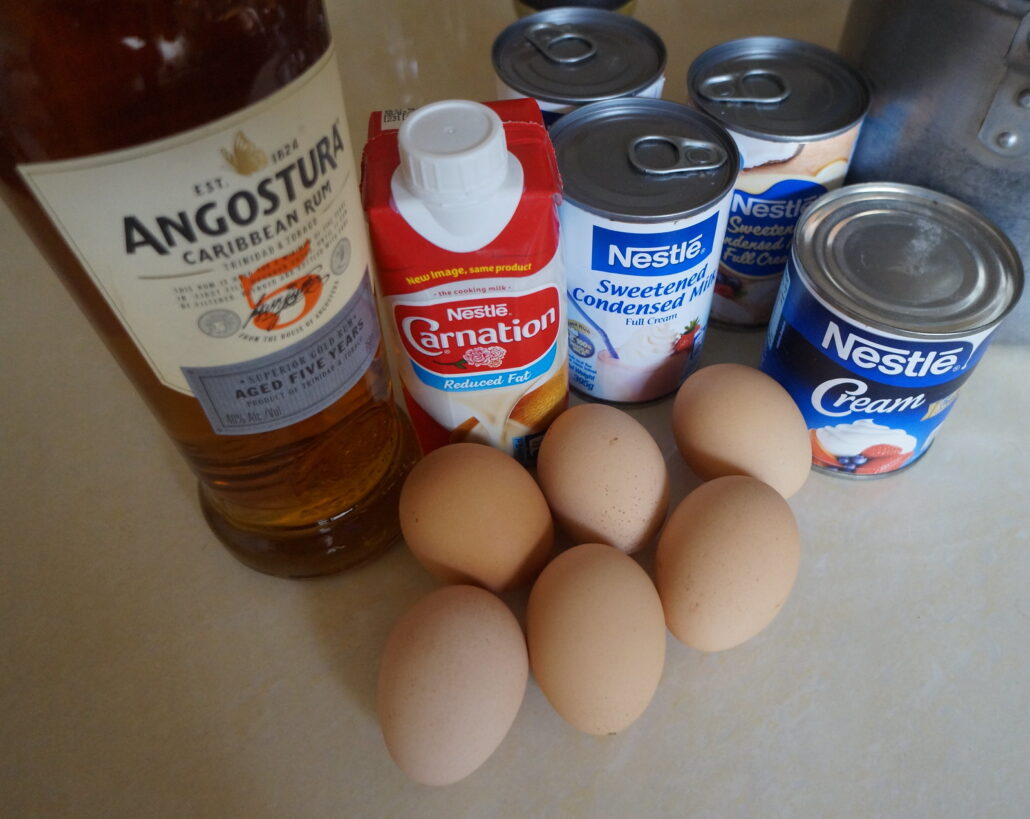
In Trinidad and Tobago, Ponche Crema gained new names including Ponche Creme, Ponche de Creme. I also became thinner, with the use of the entire egg instead of just the yolk. The most important difference between Traditional Ponche Crema and Trinidadian Ponche Crema is the use of Trinidadian Rum and Angostura Bitters in the latter.
Day Eight: Cocoa Ponche Creme
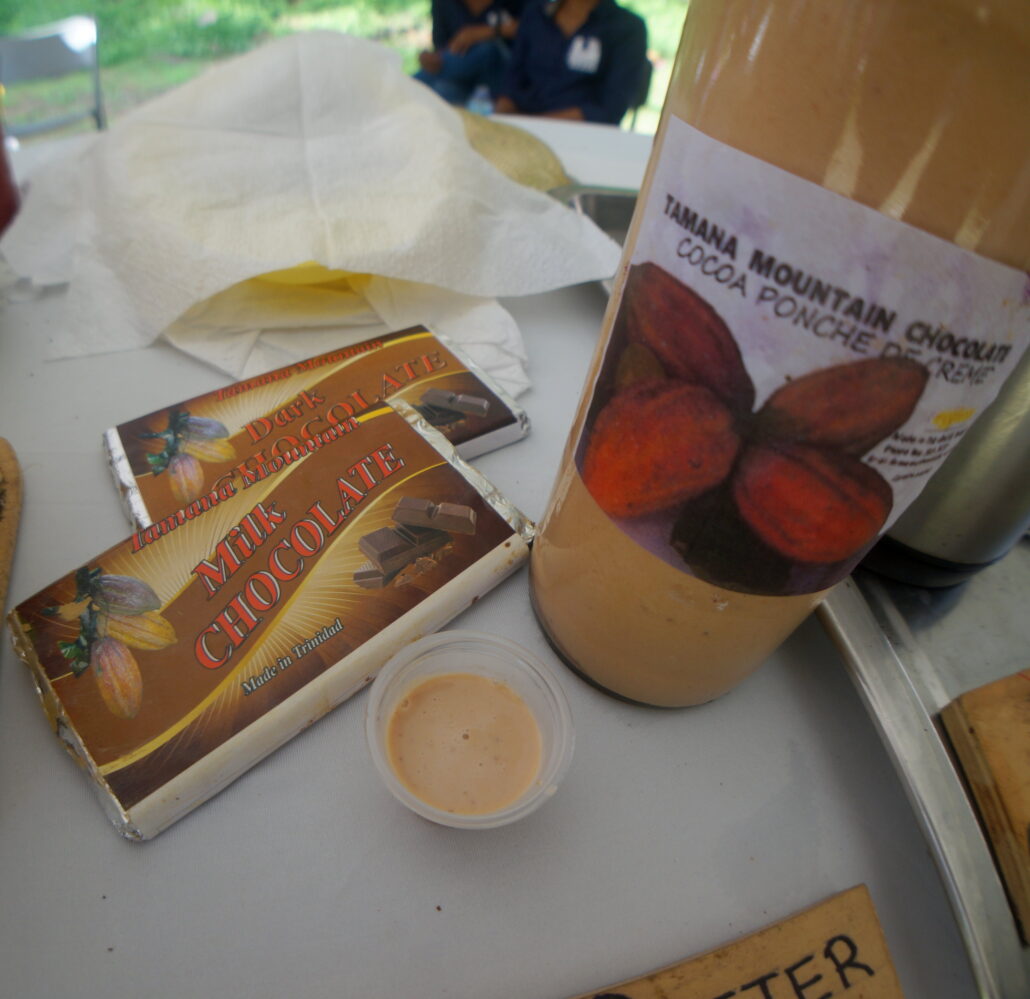
The ingredients for Ponche Creme were introduced to an area in South America where cocoa was already being cultivated and consumed. The earliest Cocoa Ponche Creme likely emerged more than four hundred years ago when both beverages naturally came together.
The easiest, but least authentic way to make Cocoa Ponche Creme is to simply use chocolate syrup and cocoa powder when making regular Ponche Creme. A more traditional method involves steeping cacao nibs in rum for several weeks, adding cocoa butter to the milk while it is being heated, and then combining both with a small amount of strongly brewed hot cocoa.
Day Nine: Pumpkin Ponche Creme
Pumpkin was a common component of many creamy beverages that Americans drank during the eighteenth century. It was used as a brewing ingredient alongside milk sugar, molasses, and spices to make pumpkin ales and colonial stouts. It was also used in some recipes for flip, which was a beverage made by combining dark rum with ingredients like cream, eggs, sugar, and dark beers like stout or porter.
Flip was popular in coastal regions in the north eastern United States, and England for more than a century. From northern ports, flip traveled south and transformed into a beverage known as Stout Punch. Some people in the Caribbean still make stout punch with pumpkins, but generally most recipes for stout punch keep it simple with just stout, rum, and condensed milk or another sweetened dairy product.
Pumpkin punch exists separately as one of the many Caribbean milk punches made with condensed milk and local fruits or vegetables. Closely related to this is Pumpkin Ponche Creme, often referred to in Trinidad and Tobago as Pump de Creme or Pumpkin Creme.
It capitalizes on the use of pumpkins as a thickener in creamy Caribbean cocktails for more than three centuries, and creates a version of Ponche Creme suitable for the many vegetarians and vegans in Trinidad and Tobago.
Day 10: Barbados and Grenada Ponche Creme
Just as Ponche Crema traveled from the South American mainland to T&T, and the ABC Islands, it spread even further to Barbados and Grenada. On those islands, recipes remained similar to those in Trinidad and Tobago, with the only difference being that they call for local white rum instead of Trinidadian white rum.
Due to different ways of making white rum across the Caribbean however, this can lead to significant differences. White Oak, which is Trinidad’s most popular white rum, is distilled in a modern multicolumn still, and then aged in an oak barrel for a short period of time before being chill filtered. The result is a clean, light taste, with hints of vanilla and toasted coconut. In Barbados, popular white rums like E.S.A. Field from the Foursquare Distillery, or Mount Gay Eclipse both contain some unaged rum made in a traditional pot still resulting in a more molasses-forward aroma and flavour. River Antoine White Rum, which is the top white rum in Grenada, is made from sugarcane syrup and juice instead of molasses, so it has bright notes of lemongrass and balsamic vinegar.
Ultimately, the same recipe for Ponche Creme can be completely different depending on where it is made in Trinidad, Grenada, or Barbados.
Day Eleven: Coconut Ponche Creme
Cattle and coconuts have been cultivated together in south India and Sri Lanka for thousands of years, and dairy milk and coconut milk have been consumed together for just as long.
Iberian explorers recognized the importance of coconuts, and by the sixteenth century had established coconut plantations in West Africa, South America, and the West Indies. Coconuts easily float from coast to coast via ocean currents, and they thrive on sandy beaches, so the coconut palm spread across the entire Caribbean a few years after introduction. Iberians also introduced cattle to the Caribbean within a few years of discovering the Americas.
As agriculture developed in the seventeenth century, it became possible to find dairy milk, coconut milk, spices, rum, and sugarcane syrup across many islands of the Caribbean. This naturally led to the emergence of beverages using these ingredients all across the region. In some parts of the Caribbean, these coconut drinks are associated with Christmas, for example Coquito and Kremas in Puerto Rico and Haiti.
While these Christmas coconut beverages are generally considered something separate from Ponche Creme, there are cases where people make a combination of the two, effectively making a Coconut Ponche Creme. The easiest way to do this is to simply make Coquito, make Ponche Creme, and mix the two.